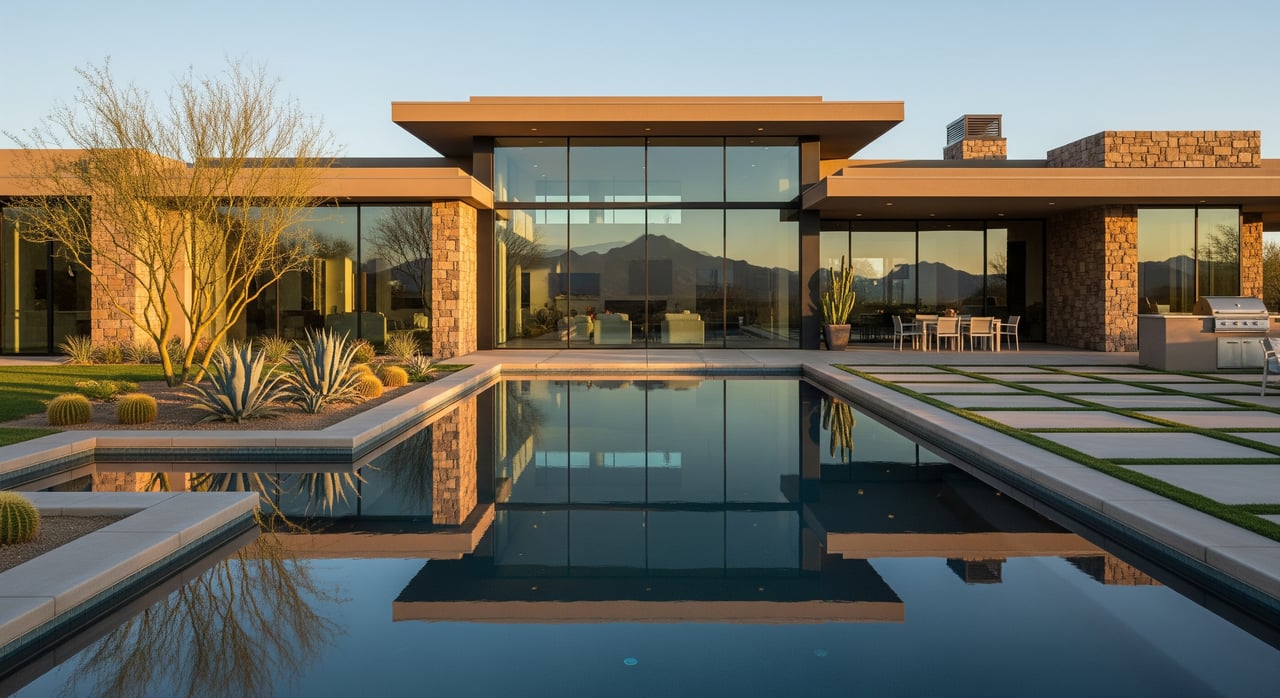
Shopping in Scottsdale’s luxury market and wondering how to finance above the usual limits? You are not alone. Many homes in neighborhoods like Silverleaf, DC Ranch, Troon North, and Grayhawk regularly price above standard lending caps, which means jumbo financing is often part of the plan. In this guide, you will learn what counts as a jumbo loan, what lenders look for, how local factors in Scottsdale affect the process, and the steps to close smoothly. Let’s dive in.
What makes a loan “jumbo” in Scottsdale
A jumbo mortgage is any loan amount that exceeds the conforming loan limit set each year by the Federal Housing Finance Agency. Conforming loans follow Fannie Mae and Freddie Mac guidelines; anything above the limit is non‑conforming, commonly called jumbo.
To see if your target price requires a jumbo loan, compare your needed loan amount to the current single‑family conforming limit for Maricopa County. You can verify the latest figures on the FHFA conforming loan limits page. Because many Scottsdale homes list above that threshold, buyers often use jumbo financing or pair a first mortgage with a second loan.
In areas like Silverleaf, DC Ranch, Pinnacle Peak, McDowell Mountain Ranch, and Old Town Scottsdale, prices can exceed conforming caps. Always check fresh comps and confirm your financing structure early.
Jumbo loan basics: What lenders expect
Lender criteria can vary, but jumbo programs tend to be more selective than standard conforming loans. Here is what you can expect.
Credit and income
Most jumbo lenders favor higher credit scores, often 700–760+ for best pricing. You should be ready to provide full documentation. Expect two years of tax returns, W‑2s and pay stubs if you are employed, or business tax returns and profit‑and‑loss statements if you are self‑employed.
Down payment and loan‑to‑value
Down payments of 10–20% or more are common. Depending on your profile and property type, loan‑to‑value ratios can reach 80–90% for top borrowers, but many lenders price more conservatively at 70–80%. Higher LTVs can mean higher rates, added reserves, or special program rules.
Reserves and debt ratio
Jumbo lenders often require 6–12 months of payment reserves, and luxury properties or higher LTVs may increase that number. Debt‑to‑income caps often mirror conforming limits, typically up to about 43–50% depending on compensating factors, with stricter limits at higher LTVs.
Rates, points, and fees
Because jumbo loans are not universally purchased by Fannie Mae or Freddie Mac, rates have historically been slightly higher than conforming. Market conditions and your risk profile drive pricing, and top borrowers can still secure competitive rates. Review rate‑point tradeoffs and compare APRs and total closing costs across lenders.
Loan options and structures
- Fixed‑rate and ARMs are both common. ARMs can offer lower initial rates but carry future rate risk.
- Interest‑only jumbo options may be available for well‑qualified buyers, which can reduce early payments but do not pay down principal.
- Portfolio lenders, including community banks and credit unions, sometimes hold jumbo loans on their books and can be flexible on unique properties.
- Non‑QM programs can help borrowers with complex income, with tighter pricing and documentation around assets.
Mortgage insurance and piggyback loans
Traditional PMI is uncommon on jumbo loans. If you want to keep your down payment lower while avoiding PMI, a second mortgage or HELOC can bridge the gap. These piggyback structures have separate costs and underwriting.
Scottsdale factors that impact jumbo approvals
Buying luxury property in Scottsdale adds some local wrinkles that can affect underwriting and timelines.
Appraisals on unique homes
Custom homes, view lots, and extensive upgrades can make appraisal comparisons tricky. Appraisers may need to reach farther for comps or apply more adjustments. Some lenders order a second appraisal or a formal review, which can add time. Plan for appraisal contingency discussions and be ready with recent neighborhood data from sources like the Arizona Regional MLS and the Scottsdale Association of REALTORS.
Insurance, taxes, and HOA dues
High‑value properties can have higher homeowners insurance premiums, and some communities carry significant HOA dues or initiation fees. Lenders include these costs in your debt calculations. For property tax details, check the Maricopa County Assessor and Maricopa County Treasurer for assessments and payment schedules.
Climate and property features
Monsoon‑related roof and wind exposure, hillside construction, and pool safety features can influence insurance and appraisal considerations. Insurers may require specific coverage levels for higher‑value structures and amenities.
Cash buyers and market dynamics
Scottsdale’s upper tier sees a higher share of cash activity, which can change negotiation leverage and timelines. Strong jumbo preapproval and clean terms help you stay competitive while managing risk.
Timeline, costs, and what to expect
Jumbo underwriting is more document‑heavy than standard loans, and timelines can run longer.
Preapproval matters
Get a full preapproval early with a jumbo lender. This is more than a quick credit check. Expect to submit tax returns, asset statements, and explanations for large deposits. For a helpful overview of typical mortgage documents, see the CFPB’s guidance on mortgage application documents.
Underwriting and appraisal timeline
Most jumbo closings target 30–45 days. Complex income or appraisal issues can extend that window. Unique homes sometimes require extra appraisal time or a second opinion, so build flexibility into your contract dates.
Closing costs and cash to close
Expect total buyer costs in Arizona of roughly 2–5% of the purchase price, including title and escrow fees, lender costs, recording, and prepaids. Prepaid property taxes, insurance, and escrow impounds can increase your cash at closing. Confirm a written estimate from your lender and escrow team.
Smart structures for larger purchases
Not every jumbo scenario looks the same. Here are common paths buyers explore in Scottsdale.
Piggyback loans to reduce down payment
A second mortgage or HELOC can bridge part of the down payment. This can help you avoid traditional PMI and keep your first mortgage within a target LTV. Compare total costs, rate adjustments, and payment structures across both loans.
VA jumbo considerations for eligible buyers
Eligible veterans can use VA financing at higher amounts, though rules around guarantees may require a down payment on the portion above the county limit. Review current guidelines on the VA loan limits page and work with a lender experienced in larger VA loans.
FHA and USDA
FHA loan limits are below typical jumbo ranges, and USDA programs are not a fit for high‑value Scottsdale purchases.
Buyer checklist for jumbo success
- Confirm whether your target loan amount exceeds the Maricopa County conforming limit using the FHFA’s limit tool.
- Shop multiple jumbo lenders: national banks, local banks, credit unions, and mortgage brokers. Compare rate options, points, reserves, and program flexibility.
- Prepare documentation early: 2 years of tax returns, W‑2s, recent pay stubs, business returns if self‑employed, bank and retirement statements, and 4506‑T authorization for tax transcripts.
- Anticipate appraisal complexity for custom or view properties. Ask for appraisers with Scottsdale luxury experience.
- Get a clear written preapproval with loan program, target rate, down payment, reserve requirement, and lock options.
- Align closing timelines with appraisal scheduling and any lender reviews.
Seller considerations when your buyer needs jumbo financing
If your likely buyer pool includes jumbo financing, a little preparation helps avoid surprises.
- Price with precision. Luxury comps can be uneven. Align your list price with fresh, hyperlocal data and understand how unique features may be valued.
- Prepare for appraisals. Provide a detailed upgrade list, permits, and a recent survey if available. Consider a pre‑listing appraisal for complex or custom properties.
- Organize HOA documents and fees. Buyers and lenders will review dues, special assessments, and initiation fees.
- Build reasonable timelines. Allow room for appraisal scheduling and lender reviews while keeping momentum.
A proactive approach keeps both sides confident and protects your closing timeline.
Ready to navigate jumbo financing with absolute clarity and local precision? Connect with Hayley Jamison to discuss your goals, compare strategies, and move forward with a plan tailored to Scottsdale’s luxury market.
FAQs
How do I know if I need a jumbo loan in Scottsdale?
- Compare your planned loan amount to the current FHFA conforming limit for Maricopa County; if it exceeds the limit, you will need jumbo or an alternative structure.
What down payment do jumbo lenders usually require?
- Many programs expect 10–20% or more, and stronger profiles often put 20%+ down; exact minimums vary by lender and property type.
Are jumbo mortgage rates much higher than conventional rates?
- Not always. They are often slightly higher, but strong borrowers can secure competitive pricing depending on market conditions.
Can eligible veterans use a VA loan for a jumbo‑sized purchase in Scottsdale?
- Yes, but you may need a down payment for the portion above the county limit; consult the VA rules and a lender skilled in larger VA loans.
What documents will I need for a jumbo mortgage?
- Expect full income and asset documentation: tax returns, W‑2s, pay stubs, bank and retirement statements, and business records if self‑employed.
How long does a jumbo loan usually take to close in Scottsdale?
- Plan for about 30–45 days, with potential extensions for complex income or appraisal reviews.
Can I avoid mortgage insurance on a jumbo loan?
- Traditional PMI is uncommon for jumbos; alternatives include a larger down payment or a second‑lien piggyback loan to manage LTV and costs.